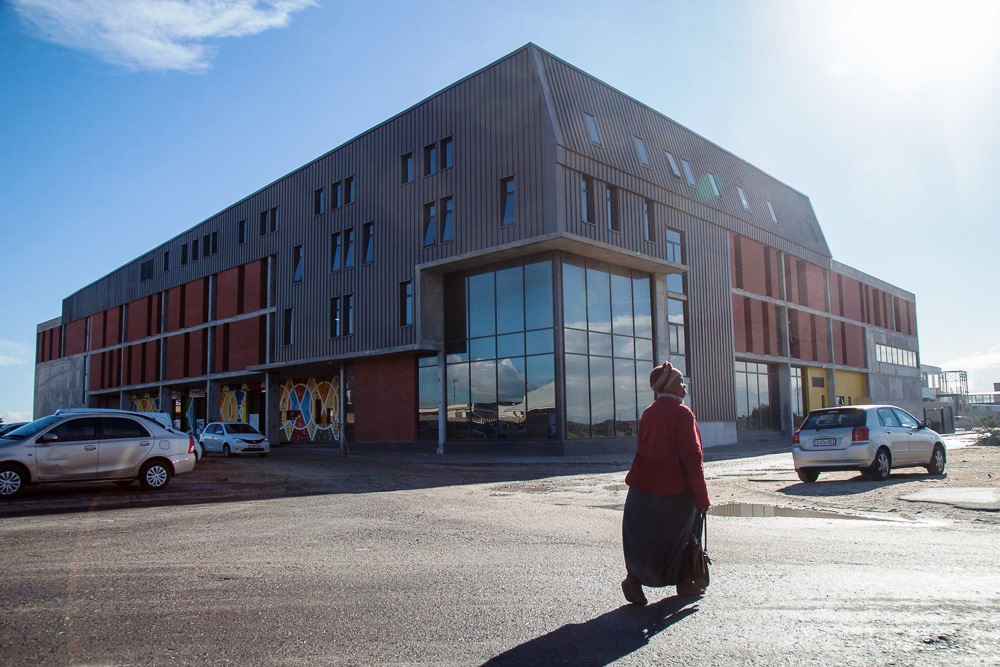
Introduction: Beyond the Dormitory Narrative
By Indälo.Blue
For decades, the narrative surrounding Khayelitsha has been singular, static, and profoundly incomplete. Established in 1983 as a dormitory town to service the labor needs of Cape Town, its economic identity was engineered to be subservient—a reservoir of workers rather than a hub of enterprise. But to view this sprawling township merely through the lens of its origins is to commit a grave analytical error. A deep interrogation of the current business landscape reveals that "New Home" (the translation of Khayelitsha) has evolved into a vibrant, self-sustaining economic ecosystem that defies the simplistic binaries of formal versus informal, or developed versus developing.
While the "socio-economic challenges" of poverty and unemployment remain visible scars on the landscape, a new reality is emerging beneath the surface. We are witnessing the rise of a distinct "Khayelitsha capitalism"—a resilient form of commerce that ranges from high-end cultural tourism to grassroots digital innovation. The true story of this township is not one of aid dependency, but of an aggressive, albeit often undocumented, commercial vibrancy. This analysis aims to pull back the veil on this invisible engine, arguing that the primary barrier to Khayelitsha’s economic recognition is not a lack of activity, but a "data deficit" that obscures its true scale from the global gaze.
The first and most striking observation when attempting to map the commercial anatomy of Khayelitsha is the profound fragmentation of information. We exist in an era where digital presence is synonymous with existence, yet for the second-largest township in South Africa, the digital mirror is cracked.
When we scour the digital landscape for a coherent register of business activity, we encounter a "wild west" of disparate platforms rather than a centralized, authoritative database.
- The Local Efforts: Platforms like the Khayelitsha Portal attempt to fill this gap, offering categories as diverse as "Towing Services," "Aromatherapy," and "Antenuptial Contracts". The very existence of such niche categories—specifically legal and wellness services—challenges the stereotype that township economies are purely survivalist. However, the tragedy lies in the execution; the underlying infrastructure often lacks detailed listings, rendering the platform more of a statement of intent than a functional tool.
- The Generalists: Broader directories like ShowMeSA and Aura Directory cast a wide net over South African commerce but fail to capture the granularity of the township. They list categories relevant to the area—"Cleaning Services," "Clothing & Textile"—but often lack specific, verifiable listings within Khayelitsha itself. This "geographical blindness" perpetuates the idea that economic value is generated elsewhere, in the suburbs and city centers, while the township remains a commercial void.
This lack of consolidated data is not merely an administrative inconvenience; it is a structural barrier to investment. If a centralized business district (CBD) is being established to foster a "self-sustaining" economy, as current trends suggest, then the absence of a comprehensive, publicly accessible business registry is a critical failure of infrastructure. It forces investors and partners to rely on "word-of-mouth" or physical verification, slowing the velocity of capital and limiting market access for local entrepreneurs.
Despite the digital opacity, the physical reality of Khayelitsha’s economy is undeniable. It is anchored by a robust retail and service sector that has graduated from informal street trading to formalized, large-scale commerce.
The narrative that townships are serviced solely by spaza shops is effectively dead. The presence of major commercial nodes like Liberty Promenade Shopping Centre and Khayelitsha Mall anchors the local economy in the formal sector.
- National Footprint: We see the footprints of national giants deeply embedded in the township’s fabric: Shoprite, Mr Price, Ackermans, and OK Furniture are not just present; they are central to the consumer ecosystem.
- The Significance: This indicates a massive internal consumer market. The "dormitory" has become a "destination" for spending. Residents are no longer forced to travel to Cape Town’s CBD for essential goods; the capital is increasingly circulating within the township's borders.
Beyond retail, the service sector demonstrates a sophisticated diversification.
- Financial and Legal Maturity: The listing of entities like LM Tax Consultants and services for "Antenuptial Contracts" signals a maturing middle class. These are not services required by a transient or destitute population; they are the markers of asset accumulation, family planning, and regulatory compliance.
- Health and Wellness: The presence of "Aromatherapy" alongside standard medical facilities suggests a demand for lifestyle services, again pointing to an economic stratification that is often ignored in poverty-focused analyses.
Perhaps the most disruptive finding in this landscape analysis is the emergence of a digital and technology sector. The stereotype of the township worker is often manual or industrial. Yet, the evidence points to a burgeoning "knowledge economy" taking root in the heart of Khayelitsha.
It is startling, in the most positive sense, to discover a specific cluster of web development and digital design firms. Companies such as Flex Creations (Pty) Ltd, GENERATE PTY LTD, Zisile Web Consultants, and Ark Design Studio SA are operating directly from the township.
- These are not informal traders; they are registered entities (Pty Ltd) engaging in high-skill, digital labor. They represent a generation of entrepreneurs who are leapfrogging traditional industrialization to join the global digital economy.
- This is not accidental. The presence of the Khayelitsha Bandwidth Barn at Lookout Hill is a critical catalyst. As a tech hub and innovation cluster, it provides the necessary infrastructure—co-working space, training, mentorship—to nurture this nascent sector.
This digital undercurrent suggests that economic development strategies should not just focus on manual skills training. There is a demonstrated appetite and aptitude for coding, design, and digital consulting. Khayelitsha has the potential to become a localized outsourcing hub, a "Silicon Township" where digital services are exported to the broader Cape Town region and beyond.
Tourism in South African townships has historically been voyeuristic—"poverty safaris" where outsiders gaze at struggle. However, the business landscape in Khayelitsha is undergoing a profound shift towards "experiential and cultural tourism" owned and driven by locals.
The emergence of high-quality lifestyle brands is reshaping the external perception of the area.
- 4Roomed eKasi Culture: This establishment is a flagship of this new era. By combining food, decor, and history, it transforms the "four-roomed house" (a symbol of apartheid spatial planning) into a venue of fine dining and cultural celebration. It is a reclamation of space and memory.
- The Department of Coffee: Located near the train station, this business pioneered the concept of artisan coffee in the township. It challenges the notion that premium products have no market in low-income areas. It asserts that Khayelitsha residents, too, are connoisseurs.
The tourism sector is supported by a growing infrastructure of accommodation and event management.
- Venues: Isivivana Centre and Lookout Hill serve as multipurpose hubs for conferences and tourism, proving that the township can host professional events.
- Accommodation: The existence of Kopanong Bed & Breakfast and the "Boutique Hotel" category listed on local portals indicates a shift from day-trips to overnight stays. This is crucial for capturing more value from the tourist economy.
By leveraging its unique history and cultural assets, Khayelitsha is moving from being a site of pity to a site of pride and profitability.
No economic analysis is complete without understanding the role of the state and civil society. In Khayelitsha, the government is both a major service provider and a strategic partner, though its role is complex.
The City of Cape Town maintains a heavy operational footprint.
- Health and Service: From the Khayelitsha Day Hospital to the network of clinics (Kuyasa, Luvuyo, Matthew Goniwe), the state is the primary guarantor of health.
- Strategic Distinctions: The City distinguishes between national registration (CIPC) and local compliance (permits), a bureaucratic layer that can be a hurdle for small businesses. However, initiatives like the Khayelitsha Business District (KBD) simulation game ("Play Khayelitsha") show a willingness to engage in creative urban planning to foster commercial density.
The gap left by the state is often filled by powerful civic organizations.
- The Forums: The Khayelitsha Business Forum (KBF) and the Khayelitsha Development Forum (KDF) are the de facto gatekeepers of the local economy. They mediate between the community, developers, and the state.
- The Chamber Connection: The existence of a specific Khayelitsha Chapter of the Cape Chamber of Commerce & Industry institutionalizes the township's voice in the broader regional economy. This formal link is vital for integrating Khayelitsha businesses into the mainstream supply chains of the Western Cape.
Geography is destiny, and in Khayelitsha, business activity is heavily influenced by spatial planning.
The analysis identifies specific "hotspots" of commerce.
- The designation of a formal Business District (KBD) creates a center of gravity for formal enterprise, moving away from the dispersed sprawl of the past.
- The MyCiTi bus routes and the rail network (despite its challenges) create corridors where businesses like The Department of Coffee thrive due to high footfall.
Interestingly, directories like Valley Community blur the lines, listing businesses that may overlap with the greater area. While the specific connection to Khayelitsha is sometimes ambiguous, the inclusion of educational and recreational businesses in these lists suggests a porous border where economic activity flows between the township and neighboring areas. This integration is essential for breaking the spatial isolation of the apartheid design.
The comprehensive analysis of the available data leads to an inescapable conclusion: Khayelitsha is an economic powerhouse in waiting. It possesses all the components of a thriving micro-economy: a massive consumer base, a growing service sector, a burgeoning tech scene, and a unique tourism proposition.
However, this potential is throttled by invisibility. The fact that we must rely on fragmented snippets from diverse online directories to piece together this picture is an indictment of the current information ecosystem. The "informal" label is often a misnomer applied simply because a business does not appear on a Google Map or a central registry.
To unlock the full potential of Khayelitsha, we must move beyond the "charity" mindset.
- Data Sovereignty: There is an urgent need for a centralized, locally-owned business registry. This would validate local enterprises and make them discoverable to investors and customers alike.
- Tech Acceleration: The success of the Bandwidth Barn model should be replicated. If Khayelitsha can produce web developers and digital consultants with limited resources, imagine the output with robust support.
- Cultural Export: The model of 4Roomed eKasi Culture demonstrates that the township’s history is a valuable asset. Supporting more cultural entrepreneurs will diversify income streams beyond retail.
Khayelitsha is a "New Home" not just for people, but for a new kind of South African business resilience. It is time the data—and our economic policies—caught up with this reality.
← Back to Home